Technology is JUST a Tool: (Post #2)

I grew up with tools in hand. A pitchfork shoveling $%&# from our calves stalls or on a construction site with a hammer trying to avoid the #$%& words from all the adults around me. I discovered in tools a way to shape the environment around me, to use them to create, to leverage my small tiny body to lift or move, and in turn, these tools shaped me. This is perhaps a secret, but one well known by those engaged with hard physical labor. The secret being: tools have shaping (formative) power and value. The more popular assumption with most tools is that we use them, eg. the human swings the hammer and hits the thumb… or nail. This is a true assumption, yet incomplete as is. The fuller truth is that tools return the favor and also use us. Tools have formative power and value, not just for the object they are employed toward or against, but toward the subject employing the tools as well. 

For example, my dad’s hands fit naturally around a drill or screwdriver – the simple tools he used, and continues to use, for over 40 years now shaped his hands, arms, carpal tunnel syndrome, and one day will most likely give the gift of arthritis. It is often easy to see how our simple tools shape and exert a dynamic influence on the wielder’s body, but there is a whole matrix of formative influence that can be overlooked. One of the overlooked areas being how tools, even simple tools, form the patterns and habitual ways of thinking about the work or arena of engagement. The tool shapes our body; it also shapes patterns of thought around the work itself, like how we do the work, what is determined to be the best or most efficient way to work, the quality of the work, or the limit and scope of the work based on the tool’s limitations – the tool shapes even as it is utilized. And arguably, the more complex a tool or the more complex a machine, the more complex the formative power and assumptions. 

There is a common assumption today in the church that tools are value neutral. I think what is meant is most often morally neutral. So in this sense, for example, the church using a building or justifying a large building campaign, is that it is simply a tool to be used for the good of Jesus and his Church. Buildings are tools and can absolutely be used for the end of glorifying Jesus. So, I’ll give this hypothetical person that point (for this conversation at least) – that a tool can be morally neutral, not good or bad. Simply that a tool has no moral value, does not therefore mean it has no formative power or value. The assumption is, “I can take any tool and when employed for my ends, justify the means.” However, the question remains, “What kind of formative power does this tool reciprocate to the wielder?” In other words, “will this tool, based on how it will shape you by using it, actually get you closer to your desired ends?” To answer that question though, or even to be aware that this is a necessary question in the conversation of tools and innovation, means you understand the basic assertion that we don’t just use our tools, they use us, form us, and shape us. (More to come on this determinism vs. instrumentalism topic.)

So, just a tool. I hear this line recycled a lot in the midst of COVID-19, “a building is just a tool.” True. The line goes on to say, “Digital technology, like a building, is just a tool.” True, digital technology is a tool, and in that sense, resembles a building, which yes, is also a tool. However, the conversation often ends here. Tools yes, but the church can use any of these tools uncritically/accidentally or critically/intentionally. I think it is safe to say all of our technological use or innovation could use more critical thought and intentional action.  While there are some overarching similarities between buildings and digital technology, the conversation around adopting digital technology as a formative church practice needs to continue to include at least: 1) an interrogation of the respective shaping powers and 2) an awareness of the assumptions those tools work within and the ethic they transmit. These are the questions (among others) capable of forming wisdom among us.

Tech is JUST a Tool: And Other Myths… (Post #1)

Is digital technology as harmless as a hammer?

A recent TGC article by Brett McCracken is titled “Are Churches Losing the Battle to Form Christians?” The opening lines are:

Among the many ways 2020 has been punishing for pastors, one of the most disheartening is the way COVID-19 has further accelerated the already troubling tendency of Christians being shaped more by online life and its partisan ideological ecosystem [I would add a few other labels here] than by church life and its formational practices.

I agree mostly. The awkward part of this statement is that online life now seems to be one of the church’s essential formational practices and environments. The troubling nature of our media saturated lives, partisan echo chambers, and reality mediating devices grows more pronounced in the midst of COVID-19. And perplexing to me, mirroring this growth of our technological dependence, is the church. For our current crisis, technology with its limitations and opportunities seems to be what has both opened horizons and definitively bounded our horizons of possibilities. One of the primary learnings many churches seem to have had is the need for a permanent “online campus”. Obviously, streaming amazing content and finding a way to digitally connect with people in the midst of COVID-19 is better than nothing. Right. Right? But hold on a second, is that obvious? And is it obvious that every church should designate more and more resources and time to curate online, digitally mediated experiences for the people we are trying to form to be like Jesus? I am not so sure. 

Are churches losing the battle to form Christians? Many are. Perhaps for a variety of reasons. The one that interests me presently is the dependence on a tool, digital technology, that has immense formative power, much of it necessarily at odds with genuine Christian purposes. Digital technology does form. But simply because you are a Christian, employing it for “Christian” purposes, and labeling it “church”; doesn’t mean you control or have even contemplated the formative influence of this tool. The cry to innovate, innovate, innovate is often a distressed grasping for the closest technological straw. To offer people a digitally mediated church experience and have them conclude what it means to BE the church is to stream content while you sip your latte in your jammies from anywhere in the world on your super computer phone is absolutely destructive to the future of the church. And I will explain why in future posts. 

Obviously there are unique pressures on pastors and churches right now. I get that as a pastor who chose to not plant a campus in the middle of COVID-19. Online presence is a good stop-gap measure and a useful tool for churches to consider. However, these unique pressures don’t excuse poor theology, quick decision making, and short-sightedness. In fact, the crisis and pressure make moving forward with wisdom that much more indispensable. In other words, WE need to think through the tools and technologies we currently employ and are rapidly adopting due to COVID-19 pressure. Interrogate before you innovate. And if we aren’t increasingly critical, not just about what tools we adopt, but their formative influence and consequences; well, churches probably won’t lose the battle to form Christians. Formation will still happen. I am just not sure we will be able to call the end result Christian.

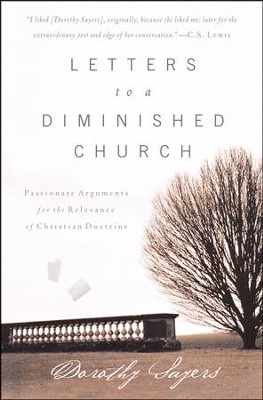
Letters to a Diminished Church – Why Work? (Post #2)

Linked below is one of the best English essays on work ever written. If you have never read this essay by Dorothy Sayers – treat yourself and your future work to it. It transformed my own view of work and specifically what it means to work as a Christian. It has interesting parallels to our current state of affairs with COVID-19 and the cultural milieu of Dorothy’s day during WWII. Enjoy.

The whole essay is hosted on the Made to Flourish website.

Letters to a Diminished Church – Hold on Creation (Post #1)

“Our worst trouble today is our feeble hold on creation.” Dorothy Sayers, writing this from within the foreboding darkness of WWII Europe and witness to the gut wrenching fallout of war, was quite serious. The essay the quote originates from is entitled, “What Do We Believe” and revisits core Christian doctrines. First, and my focus, God the Father Almighty, Maker of all things. In other words, Creator. The essence and ultimate image of creative activity. And we, humanity, are “most godlike and most ourselves” when occupied in the work of creation. Do you believe that? 

God is a creative God. We, made in that image, are made to create. Yet, as many of us in today’s world experience, our creative energies are diffused by endless distractions, given over to an ambient anxiety fueled by our late night screen time, social media obsessions, and enforced through a materialistic outlook on life. Our materialism habits and increasing disconnection from “nature” continue to prop up our material world, while the artificial and manufactured environments we create form us in their own image. As Sayers says, “to sit down and let ourselves be spoon-fed with the ready-made (artificial) is to lose our grip on our only true life (creative activity) and our only real selves (image of God).” 

Ironically, I just spoon-fed myself some boxed cereal (Honey Bunches of Oats – come on!). Who knows where any of it came from, all I know is I get to eat it and I can throw the waste away. I don’t have to worry about where the food comes from or where the waste goes, I can eat, drink, and be  merry and I myself testify to the truth of Sayer’s point. The passive consumer unconcerned about waste and production, unskilled and unpracticed in the art of creating, unformed in the character crucible that is the art and work of creation – loses something of genuine human life. 

In this vein I feel caught between. On the one hand, my own upbringing on a farm (still very caught within the industrialization of America and the technological revolution) that valued creation and instilled that value in me. On the other hand, I find myself swept along in the tide of my generational and cultural moment, imbibing largely in secular thought, practice, and philosophical assumptions about life, meaning, identity, and purpose. I’m mobile, educated, technologically laden, digitally adept, globally “aware”, mostly isolated from traditional cultures and helplessly idealistic. I live in a large metropolitan city and the more I try to be unique, the less I can pick myself out of a big city crowd. My life is increasingly lived in manufactured spaces, dependent on artificial goods, and mediated by digital devices. Can you relate? 

The ready-made, artificial convenience and the easy-everywhere of the internet makes my life convenient to the 3rd power. I have more access to knowledge than I could ever integrate in 10 lifetimes. But these trivialities, conveniences, and levels of access do not share answers to the deepest questions of life. Maybe more accurately, these realities of our lives do not shape in us the capacity of thought, character, or life together necessary to formulate meaningful answers to life’s deepest questions. This is one reason therapy has such attraction today for myself and my peers. Uprooted from our lived memories with family in a central location and embedded in the matrix of a largely material, mechanistic, secular way of viewing the world – our meaning making is short-circuited. A metaphor I often think about is that my existence is increasingly mechanically separated (canned chicken anyone…). Therapy holds the promise of integrating and making meaning of our experiences and the existential void felt in our largely artificial world. 

The truth I want to make clear is painfully simple – God is Creator. Creation is given. You as a human are made to be creative and live in a creative harmony with creation. You are created in a specific image, the image of God. Two major aspects stick out to me:

1) To live a truly human life means one of creative activity – work. That the term “work” almost never connotes for most of us, creative activity, shows the distance from recognizing and welcoming this creative activity we were made for as extremely valuable for self and society. In other words, a Creation theology would instill in us a deep value for work-as-creative-activity imaging God our Creator.

2) the Creator has made us creatures and embedded us within a world we did not make with responsibility to care for and rule. Exploit, abuse, and treat with contempt has no place within the Genesis text before Genesis 3. The essential harmony we are created for with God included a harmony and relationship with nature. This relationship as experienced post-Fall is estranged. Particularly in the modern West it is largely forgotten and confused with some conservation movement. The issue is not conservation (that is great), the issue is use. Not, how will we not use certain pieces of land, but, how will we use the land we do use. Most of our use assumes no inherent value of land, plants, animals, place, soil, etc. until we assign monetary value or can orient it to production of consumable goods for profit. However, how we can we claim to become people of reconciliation or peace while we enact violence and oppression to the very land nurturing our life? God as Creator means the land we inhabit, resources we use, and waste we create matters to God and is relevant to every person inhabiting this earth. The artificial bubbles we assume we live in may be increasingly possible with technology, but deny the depth of human existence we are created for. 

The meaning and contour of life foisted upon me to consume inane trifles manufactured to please, to make convenient, and to be discarded treating creation as something to be used, abused, or a problem to solve is false. It is a false way to be in this world as a creature. It is a false way to be in this world as co-creators. The current mental health crisis, opioid epidemic, racial upheaval (needed), political discourse (generous term for it), existential angst, seem to me to betray a fundamental wrong view of our world and self within it. 

Today, creation spoke this truth to me. I sit by a beach off the Gulf Coast on a little island off the panhandle. As I write a storm begins to stir up tossing waves and throwing rain in its wake. We walked out expecting sun (thanks Accuweather) and got rain! A paddle boarder hoping for calm got a little more chaos than their sense of balance could handle. My toddler thought he could conquer a wave and realized fast the waves don’t respect his budding independence like mommy or daddy. Next to the ocean – you respect given nature and its demands on you. Otherwise, people die. On a lighter note – even the island’s architecture bears witness to this basic relational quality. Houses are built on stilts; it will flood. Windows have shutters; hurricanes will blow in. What I love most is the surprising lack of ostentatious manufacturing of homes or landscaping. I am at the beach. I am not there to look at a house or the carefully manicured grass. The architecture and land care (natural vegetation) does what it can to complement the place it is. This is a way of respecting nature, not treating it as material vacuous of value until you use it or make money off it. The landscape is mostly natural and naturally occurring. How refreshing! It tells a story of life, growth, death, return, and resurrection as the natural life cycle runs its brilliant course. The beauty of plants able to bloom with the morning dew and fold in magical disappearance from the afternoon heat. The waves themselves, an eternal now, inviting you into the present moment, whisper, shout, crash to the glory of Creator God. 

Creation matters. And if you find yourself struggling with “sin”, frustrated by the frenetic frenzy of your life, seeking for an identity that eludes your grasping, and feeling largely prideful, in control, or anxious – let creation speak truth to you today. Perhaps Dorothy wouldn’t mind me updating her phrase to include, “Creation’s hold on us.” Perhaps you release your hold on subjectivity and let Creation be subject. Or better yet, get knocked down by a wave. As the wave holds you in its grip, give glory to God. 

*(To be fair, I got here by amazing machine technology – Iphone alarm, Uber, Starbucks, security, Southwest!!!, airplane, rental car, I benefit from these amazing technologies. I am not trying to rid myself of all technology, but to question the way of life assumed by unconscious use of our modern tools and ways of life.) 

– This essay is written reflecting on the essay “What Do We Believe” in Letters to a Diminished Church by Dorothy Sayers. 

Covid-19 Journey: Discovery (Post #1)

Let Your Life Speak – the popular title by renowned spiritual writer and educator, Parker Palmer, is an apt summary of my discovery in the midst of a global pandemic. The book also prompted this journey for me. A specific line of the book penetrated through the hard exterior of acquired false humility (some call that pride haha) and the dullness of my own hearing to anything beyond status quo. The line is one quoted from Frederick Beuchner, “Vocation is where your great pleasure meets the world’s great need.” I spent most of my life to this point meeting the great needs I saw and intuited around me and doing the mental, emotional, and spiritual gymnastics to convince myself these needs, are in fact, my great pleasure. Vocation is a concept I have spent two years thinking about, praying about, and, perhaps misguidedly, trying to “solve.” Thank you to all those that have supported me in this journey! But, humans are more complex than a simple equation to solve.

Curiosity of vocation is leading me past the questions of what job would I like or be “good” at to the deeper questions of “what does it means to live a deeply human life?” What does it mean to be human? What does it look like to be a human being and to live a life that flourishes, not just survives (graduate school anyone…)? Parker Palmer goes on to comment that this journey of discovery necessarily must begin from within, to know who you are (maybe even what you are) and recognize your stunning beauty and natural limitations. The discovery of how you, specifically, particularly incarnate the life and image of God on earth in a unique distorted way in this beautifully broken matrix of society, nature, and humanity. The point being that you cannot start with what the world needs – it needs everything and often urgently. I mistakenly thought discovery of self could happen through meeting all the needs around me. What I discovered is that I simply have an addiction to meeting needs, being helpful, and assuaging my own insecurities through my indispensability to others – most often in a spiritual sense.

Now, need meeting can be quite good. My toddler has quite a few needs. Soon he will wake up and need a (another?!?) snack. What I am discovering is the hope of glory – Christ in me. Emphasis on me. Not that Jesus shouldn’t have the emphasis. But my particular background, early experiences, education and ministry orients me to Christ in you, or Christ in the world and what I am discovering is the seedling beauty and promise within a Creation theology and the basic Gospel. I am made in God’s image. I reflect him and this image is increasingly, by the power of the Spirit, conforming me to the image of God’s son – for the purpose of holistic, mature, abundant life with God. The point I am making with all this abstract language is that I reflect something of God – not simply when I meet needs or perform a religious service, but by being Landon. By being… human. 

Accompanied with this truth came an unwelcome sense of freedom, as Jesus says, “You shall know the truth and the truth will set you free.” Unwelcome because this freedom meant admitting truths, and subsequent truths unleashing longings, desires, hopes, dreams, that up to now I could hide from by helping you find Christ (meeting your needs). Simply put, it is a journey of owning more and more my full humanity and the invitation to mirror God’s creative goodness and abundance in the world. 

This journey has already prompted major career decisions, future uncertainty, and lots and lots of reading. One of the other blessings/challenges it has given me is the opportunity to own my voice. To share it vulnerably and let more of my self – the real one – be seen by you, the world. So, I started this blog to reflect on this journey, to ask honest questions, to record my thoughts and discussions, and tangentially, I hope it is inspiring to discover Christ in you. 

To Be Human is my own reflections, thoughts, even dreams meant to nurture this nascent image (humanity and divinity) in each of us – mostly myself. It is to honor authors, thinkers, and communities I engage with through serious reflection and honest questions. Much will be conversations prompted by the books I am reading or reflecting on. Some of it will be directed toward pastoral leadership and current conversations or questions for the church. My hope is that it will prompt serious reflection and honest questions in you and ultimately that these would lead to people, families, and communities pursuing wisdom and character. My desire is that we all might re-member more of our humanity in a world subtly pressuring us to the confines of machine, standardized, and disembodied existence. As Craig Gay puts it, to embrace “ordinary embodied human existence” and thus to embrace Christ our brother.